
Is it isolation or interdependence?

I think this is really worth speaking about because at the centre of it is something quite simple, but we’ve drifted a long way from it.
We’ve ended up in this belief that we don’t really need each other anymore. That independence is the goal. That being able to hold everything on your own is the highest form of strength. And I just don’t think that matches how humans actually function.
If you look back at how we’ve lived for most of history, it wasn’t individual like this. It was communities. It was tribes. It was shared responsibility, shared care, shared survival. People weren’t trying to do life alone, they were doing it together as part of something bigger than themselves. Connection wasn’t something you had to maintain, it was just built in.
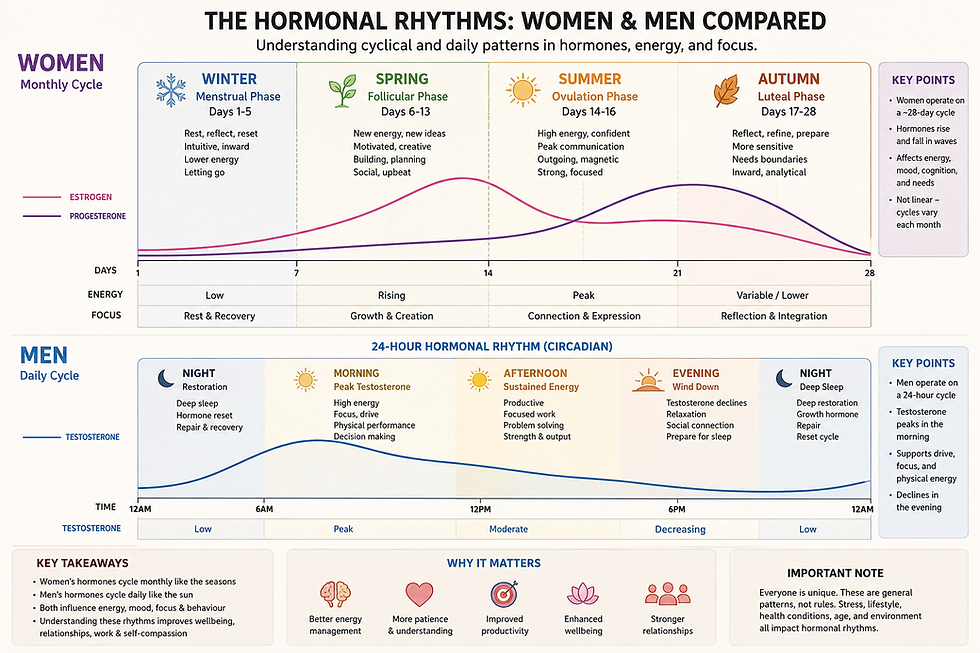
Even time used to be understood differently in many cultures, more cyclical, more seasonal, more in tune with nature and rhythm rather than this constant linear push we live in now.
And I don’t think we’ve replaced that with anything that actually supports people in the same way.
What we’ve replaced it with is pressure, individual pressure and private pressure. The expectation to cope, regulate, achieve, perform, and still appear fine while doing all of it on your own.
And you can feel the result of that now, people are more tired, anxious and disconnected. Not necessarily because life is harder in one obvious way, but because more of it is being carried alone.
There’s also quite a lot of research now showing that strong social connection is one of the biggest predictors of wellbeing, and that loneliness has a measurable impact on both mental and physical health, including stress levels, sleep quality and long-term health outcomes. In simple terms, people who feel connected tend to cope with life better than people who feel isolated.
So it’s not just emotional, it’s biological as well, I think that’s the part we’ve forgotten.
Connection used to be built in and now it has to be rebuilt on purpose.
This is where it becomes practical, because it’s not about suddenly having loads of people or forcing yourself into constant social energy. It’s much simpler than that, but it has to be intentional.
It looks like this:
actually checking in with people properly instead of only reacting when you have the energy or time
calling someone instead of letting everything sit in messages that slowly fade out over days or weeks
seeing people in real time where you can actually read tone and presence instead of just text and assumptions
staying in conversations a little longer instead of shutting them down quickly because you’re tired or distracted
repairing small misunderstandings instead of withdrawing and letting distance build quietly
being honest about capacity instead of automatically saying yes and dealing with the fallout later
choosing spaces and people where you don’t have to perform to belong, where you can just be yourself without editing everything
None of that is complicated, it’s actually quite ordinary, but it only works if it’s consistent.
And I think we’ve lost consistency in connection without really noticing it.
Because when people become disconnected from each other, they also start becoming disconnected from themselves. You lose rhythm. You lose awareness of your own limits. You either overextend or you withdraw. There isn’t much in-between anymore.
This is where burnout starts to make more sense as well, a lot of it isn’t just workload, it’s lack of shared load. It’s too much being held internally, by one person, all the time.
I say that as someone who’s worked in burnout and also lived it. There was a point where I had to be really honest with myself and realise I was the one saying yes too quickly, filling every gap, not actually checking in with what I could realistically hold.
Even in structured jobs, there is still a moment of choice in how you respond. You can pause before you agree. You can hold a boundary without turning it into a whole explanation. You can stop treating every request like it has to be accepted immediately.
But that only really becomes possible when you are actually connected to yourself in the first place.
And then it starts to flow outward again.
When you’re more connected internally, you naturally start connecting better externally. You communicate clearer. You don’t disappear as easily. You don’t over give as much. You stay present in relationships instead of dropping out when things feel uncomfortable.
So when I talk about interdependence versus isolation, I don’t mean going backwards or rejecting modern life.
I just mean reintroducing what used to be normal, human.
Real conversations and regular contact, admittedly I am from the generation who would write letters or could only call, not have 20,000 other options on one device to disconnect us. This is what we are craving an analog life. Less outsourcing connection to screens and more actual presence in people’s lives instead of only digital proximity.
Living in the 90's was an exceptional time and showing our next generation they can be more present rather than stopping for that selfie or recording the moment, it is being in that moment. Research is showing how many people are buying 'dumb phones' not smart ones...these are the smart ones. Why do we have to respond to work when we are with our families or loved ones? It is taking away the distraction to reconnect again.
Most people don’t actually need more people, they need more consistent connection with the people they already have.
When that starts to come back, even in small ways, life doesn’t become perfect, but it does become more human again.



Comments